
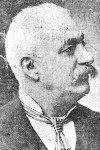
Last week, I looked at Benjamin F. Graham’s time as Eastern Market master. We paused in 1900, when the issue of lack of space was raised. Graham’s report to the commissioners in 1902 elaborates:
There are eighty stalls in the market, and a cafe, from which all the revenue is derived. The stalls are on the ground floor, and the cafe is a large room which overlooks the lower space. This room was originally intended for an office for the market-master, but was converted some years ago into a cafe, which adds $72 to the annual rental of the market. It has never been vacant since it was instituted. Of the eighty stalls, there is not a vacancy, nor has there been since May 12, 1897. During my incumbency in office there has been but one vacancy and that was for but two and a half months. I have applications in hand at all times for any vacancy that may occur. I could easily rent 120 stalls if I had them and could have for several years previous to this time.
It would take some time, but in 1906, William Haskell, the Sealer of Weights and Measures – and therefore in overall charge of the markets – wrote that not only was there a great need for an expanded market, but that it would pay for itself “in ten or eleven years.” The following year, the District Appropriation Bill contained $30,000 for the expansion.
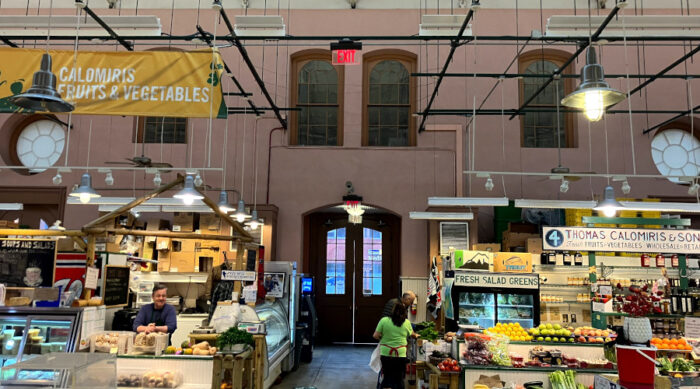
With money in hand, the city got to work. Under the direction of city architect Snowden Ashford, city engineers began drawing plans. Early in 1908, bids were solicited for the actual building, and on January 25, ten proposals were opened, the lowest of which was Milton C. Davis’s bid of $23,298 ––well under the sum appropriated.
Work began immediately, and over the next months the commissioners not only followed Davis’s work, but bid out refrigerators for the addition. On October 21, 1908, the new addition – which consisted of a two-story central hall and a north hall with a single roof the same height as that of the original building – was accepted by the commissioners. On December 19, the addition was formerly turned over to the city, and the bidding on stands within was begun.
The addition was a great success, though there was some grumbling about the fact that the cost of a stand there was higher than in the old building, prompting Haskell to lower the rent in some cases.
Sadly, Benjamin Graham did not have long to preside over his newly expanded empire. During 1910, his kidneys became inflamed, severely limiting his ability to do his job. In the end, he died of cardiac arrest.
He was buried in Arlington Cemetery, in a ceremony presided over the Grand Army of the Republic, of which he had been an active member for many years.