
Two weeks ago, we looked at James Crutchett and his gas works, built near the Capitol to light the building as well as the whole Capitol grounds. The outside light was to come from a single lantern placed high above the dome of the Capitol. We ended with the news that a blue-ribbon panel had decided that the mast atop the dome would not impair its structural integrity.
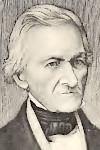
Now it was just a question of actually building it, and this was begun in August 1847. On the 27th of that month, the Washington Daily Union (published at the time by Thomas Ritchie, seen at left) reported that the mast had been raised. It was described as being 92 feet tall and made from a single white pine from Pennsylvania that had originally been 100 feet to the first branches. It was held up by braces that connect it with the stone of the main building, that are then run through the dome and up to the top of the pole, just below the light. The pole was painted white, while the bracing wires were blue.
The lantern at the very top was not completed yet, but the Union stated that it was “a handsome affair, […] covered with gilt, and when up and with its glass ceiling and filled with plate-glass, we think it will be a good finish to the heretofore blank and empty gallery of the dome.”
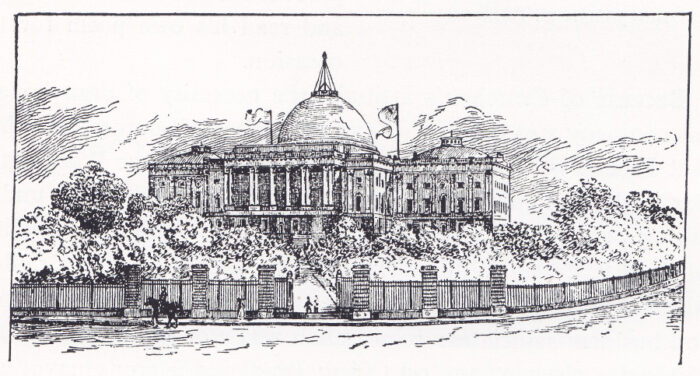
It would take some time until lantern was in place and lit. On November 19 the Union wrote that it had been illuminated:
We witness last evening one of the most splendid and beautiful spectacles we ever beheld. Imagination could scarcely conceive a scene more brilliant, and we cannot command language adequate to its proper description.
After a passage describing the chandeliers in the House and Senate chambers and how well they lit these two rooms, as well as many of the corridors in the Capitol, they followed up with proof that they indeed “cannot command language adequate to its proper description.”
[A]bove all, the immense lantern, filled with burners, tower[s] above the dome of the Rotundo.
It is quite possible that their underwhelming description had more to do with the fact that this new light was, well, underwhelming. 10 days later, the Daily National Whig minced no words:
This attempt at lighting the Capitol grounds, it would seem, proves fruitless and vain. […] We cannot commend, for silence in such a case is commendation, and therefore we decidedly say that unless Mr. Crutchett can produce a more brilliant light – a light whose rays when disseminated shall illume the Capitol grounds more to advantage that has been shown by his present top-light on the cupola – we must then assert, and be willing to maintain, that this portion of his design is a perfect failure to say the least of it.
Less than two weeks later, the Whig returned to the question of gas lighting. While they had nothing to say about the outside lantern, they fully supported the interior lighting scheme, and proposed that Crutchett be hired to light up the “streets and avenues” of Washington.
Next week: Removing the lantern.