
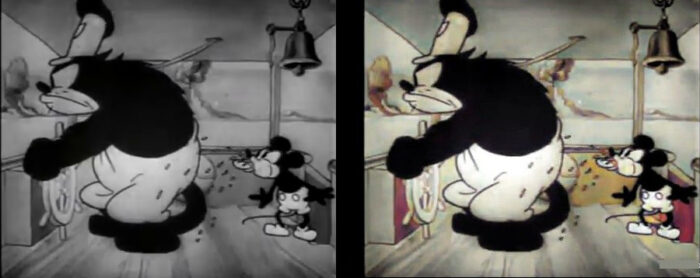
It’s copyright day. Again. As in past years, I have looked through the books that are now out of copyright to find something of interest, though this year’s discussion is completely overshadowed by the news that Mickey Mouse (well, more accurately, his appearance in the 8-minute animated film “Steamboat Willie”) is now in the public domain, so you can do with his likeness what you will.
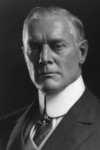
But I’ll leave that to Ruben Bolling of The Dancing Bug and stick with what I know. And I did find something: A biography of Abraham Lincoln written by former Senator Albert J. Beveridge (that’s him at left) and first published in 1928. Beveridge’s work is of interest for two reasons: His attempt to bring Lincoln and his surroundings to life, and the fact that he footnotes all his sources. The following excerpts are about Lincoln’s time on Capitol Hill as a member of Congress in the late 1840s. (I have not put in all the footnotes, but there are multiple listed for each paragraph in the original)
The first is about Washington itself:
The capital looked like ‘an ill-contrived, ill-arranged, rambling, scrambling village.’ Its houses were far apart, with privies, pigsties, cow-sheds and geese-pens in the back yards. In alleys and streets were piles of garbage, about which pics, geese, and cows wandered at will; they were scavengers and anybody who disturbed them was liable to a fine. Wells with pumps were the only sources of water for all houses. Fine dwellings and shanties stood side by side, ‘a strange jumble of magnificence and squalor.’ Only two streets in the whole city were paved, and these poorly and in part; while with one exception, the few sidewalks were of gravel and ashes, ridged in the center. (p399)
But he also describes Lincoln’s living arrangements. (Note that the landlady’s real name is Ann G. Sprigg, but almost all sources add the superfluous ‘s’ at the end)
The Lincolns were to the boarding house of Mrs. Spriggs on Capitol Hill where Stuart, Hardine, and Baker had lived when they were in Congress. Spriggs’ boarding house ‘was the fourth of a row of houses known as “Carroll Row,” which stood on the site of the present Library of Congress. Mrs. Lincoln and Robert remained for perhaps three months. At the boarding house she never appeared except at meals, but the boy, who ‘seemed to have his own way,’ was conspicuous. [p398]
And finally, a bit about the Capitol Hill neighborhood itself:
The social life was merry, if somewhat rural. In warm weather women visited bare-headed and on foot, and everybody sat and gossiped on doorsteps and porches. Capitol Hill. Where Mrs. Spriggs’ boarding house was situated, was occupied by residences of quiet ‘church-going’ people who made no pretension to fashion. There were two or three groceries, several drug stores, a shop where needles and ribbnos were sold, two dram sops, and a taffy dealer ‘who spat on his hands’ to make his candy brittle. Boys were kept busy driving pigs and geese from the gardens. The instability of Washington society impressed foreigners – a town of officials, place-hunters, and legislators from the various and differing parts of the nation. Few members of Congress were accompanied by their wives and in hotel and boarding house the absence of women was noticeable. [p402]