
In preparation for my talk next month about the history of Eastern Market, I was reading through the building’s National Registry of Historic Places nomination form from 1968. In it, I stumbled across this sentence:
“It is said that during the Spanish-American War, the basement was used as a rifle range.”
Obviously, this needed more research.
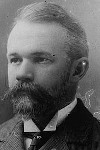
It turns out that the basement of Eastern Market was indeed used as a rifle range. However, it was not during the Spanish-American War, but rather in the run-up to the First World War. The war had been raging in Europe for a year and a half, and it would still be almost a year until the United States declared war, when the Washington Evening Star reported on May 1, 1916 that plans were afoot by the District of Columbia Rifle Association, under auspices of the National Rifle Association (NRA – that’s their president on the left) to install an indoor rifle range at Eastern Market.
Two months later, the range was open. The Washington Times reported that any District-based rifle club could use it, and that both rifles and ammunition were free. The only charge would be 25 cents for “maintenance of the range.” Martin McGrory, of the Marine Corps, was in charge, and starting the following week, the various clubs from the District would be assigned times to practice.
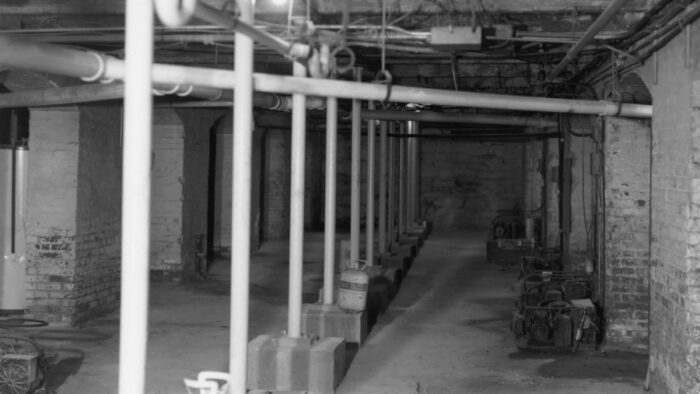
The new range was, in the main, a great success. The only problem was ––as can be imagined by anyone who has been in the basement of the Market–– the noise. Firing off rifles in such an enclosed space was doing nobody any good and so the following month, the NRA’s magazine, “Arms and the Man,” reported that a “boxed firing range” had been installed. This meant that each shooter stood in a box with a hole facing the target cut into it. Aiming was done through the hole, keeping much of the noise (and smoke, presumably) away from those at the range. This meant that the “noise in the area between the firing line and the targets will be as great as ever, but only a little will come back to the shooters.”
Whether and how well this worked is unclear, but the range certainly was well-used over the next few years. The biggest problem was that the bullets kept perforating the back wall, allowing the asphalt and sand behind the wall to leak out. The range had to be shut down for a day to correct this problem. Early the following year, heating was installed as well, to make sure that it could be used in the cold months, as well.
The last time that rifle range was mentioned was in mid-1918, and it does not seem to have survived the end of the war. If you want to visit the space that the range used to be, just go to the pottery shop that can be accessed from the outside on the southeast corner. You may not end up with a bullseye or ringing ears, but maybe you’ll walk away with a nice mug.