
According to a brochure from D.C.’s Historic preservation office, there are currently a dozen active cemeteries in Washington, plus another ten that are inactive. What they don’t mention are the many cemeteries that have been entirely obliterated. It is one of these I want to look at today, and while it’s not on the Hill proper, it was used by Hill residents.
Graceland Cemetery was founded in 1871 to give African American citizens of Washington D.C. an appropriate place to be buried. Too many of the other cemeteries were segregated, making it difficult to find an appropriate final resting place for a large percentage of D.C. residents.
The founders soon purchased a site with 30 acres, located at the intersection of Benning and Bladensburg roads. The land was subdivided into 20 sections, then further divided into 5,000 lots.
The new cemetery was dedicated on May 30, 1873, and soon thereafter, obituaries began to note that their subjects were to be buried in Graceland.
An 1881 article in the Washington Evening Star about the meeting of the cemetery’s association included a nice description of it:
Graceland Cemetery is delightfully located, easy of access, the Columbia street cars running to its gate, and has become already one of the beautiful places of this city. This is demonstrated by the increased demand for lots by our citizens desiring a quiet place to lay their loving dead. The attention of the public is invited to this cemetery, especially those desiring to purchase lots at very low rates.
Six years later, the Washington Bee ran an article that, similarly, reads as an advertisement for the cemetery. In spite of the headline “Where to Bury Our Dead,” it speaks only of one cemetery (well, two, if you count the potter’s field, which they strongly advise against using)
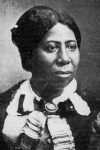
While most who were buried there are people whose quiet lives have been lost to history, a few whose name has survived to today were interred there. For instance, when Anna Murray Douglass, first wife of Frederick Douglass, died in 1882, she was buried there.
Ten years later, Philip Reed (also known as Philip Reid) known for having cast the Statue of Freedom on the top of the Capitol dome, was buried there.
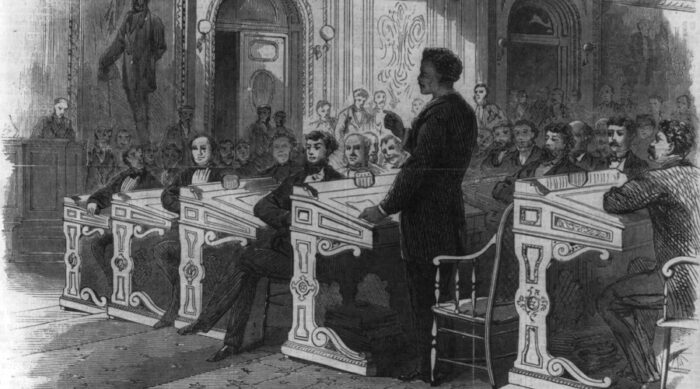
The following year, John Willis Menard, the first African American to be elected to Congress (though skullduggery and racism combined to keep him from ever taking his seat) found his final resting place in the cemetery.
Sadly, none of them would stay there. While the cemetery had been sited well outside of the city, houses soon sprouted around it, and with this influx came complaints – both valid and bogus – about the dangers presented by it. Legislation was introduced in 1892 to close the cemetery, and in 1894 a bill closing the cemetery passed, with it being officially shut on August 3 of that year. Over the next three years, bodies were disinterred and distributed to other cemeteries: Douglass to Mount Hope in Rochester, NY, Reed to Columbian Harmony and later to National Harmony Memorial Park, Menard to Woodlawn Cemetery.
The land was sold in 1899 and today houses the Hechinger Mall – and part of Maryland Avenue.